
LOCKSMITH & SECURITY ADVICE · REVIEWED 13 NOVEMBER 2026
Spare keys, restricted keys and secure key keeping
Check what can be copied, what permission is needed and where spare keys will be stored.
Ask the right key cutter
Explain whether you need an ordinary spare, a restricted or patented key, a safe key or a vehicle key. Some work needs a specialist, a security card or the system owner's written authorisation; a normal key-cutting counter may not offer it.
- Ask whether cutting, coding or vehicle programming is included and when the key will be ready.
- Keep any key card or code private.
- Test the new key using normal operation before relying on it; ask what happens if it does not work.
Keep spares secure
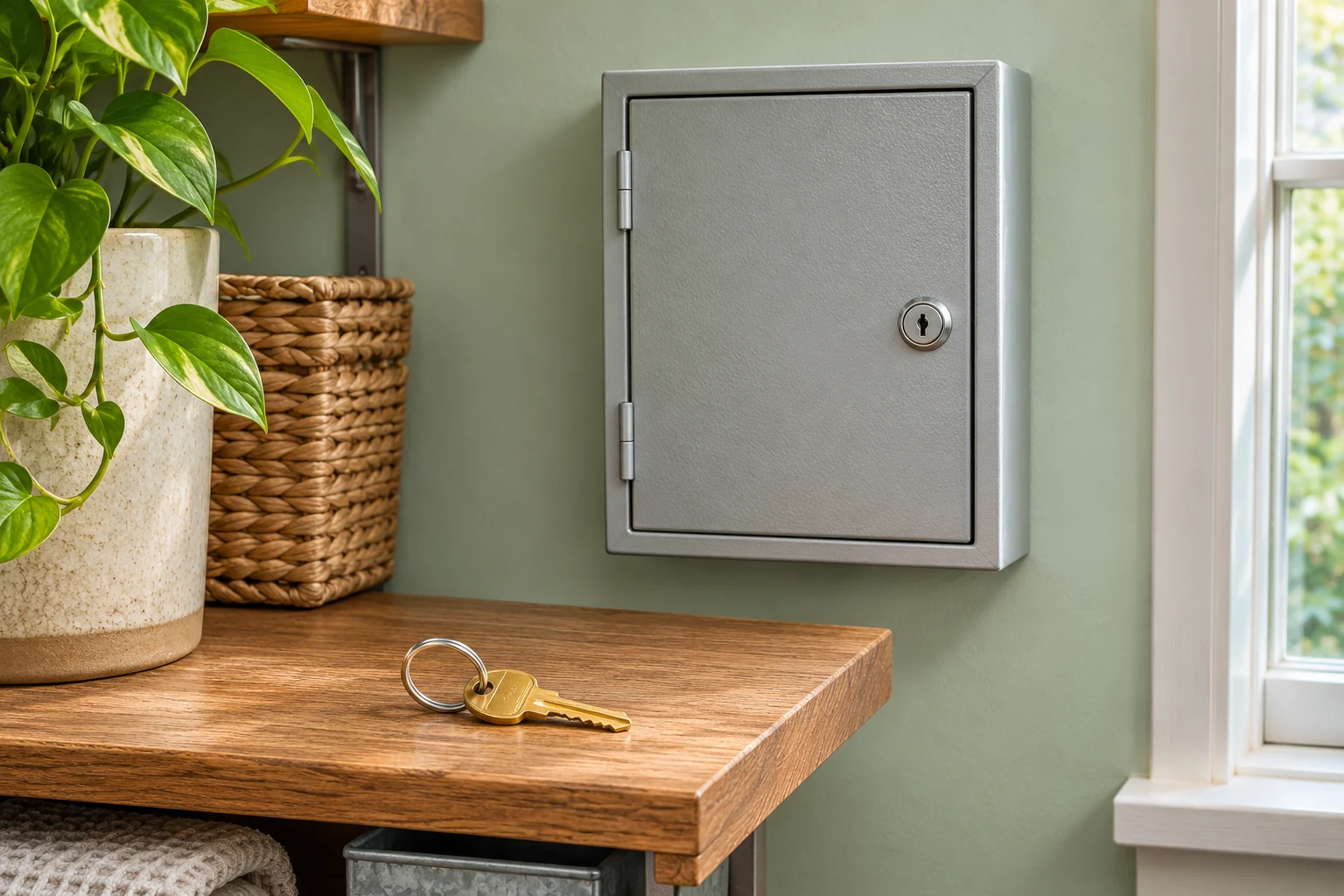
Use a trusted keyholder or a suitably specified key safe if appropriate, and check the insurer's conditions. Keep keys out of reach through doors, letterboxes and pet flaps, while preserving occupants' safe escape arrangements.
- Do not leave spares under mats or plant pots.
- Do not publish key photographs, access codes or identifiable key labels.
- Review who has keys or codes after a move, lost set or change of authorised carers or staff.
Sources & review
Original directory guidance based on the sources below, checked13November2026. It is general information; confirm your own equipment, policy, access rights and circumstances.